


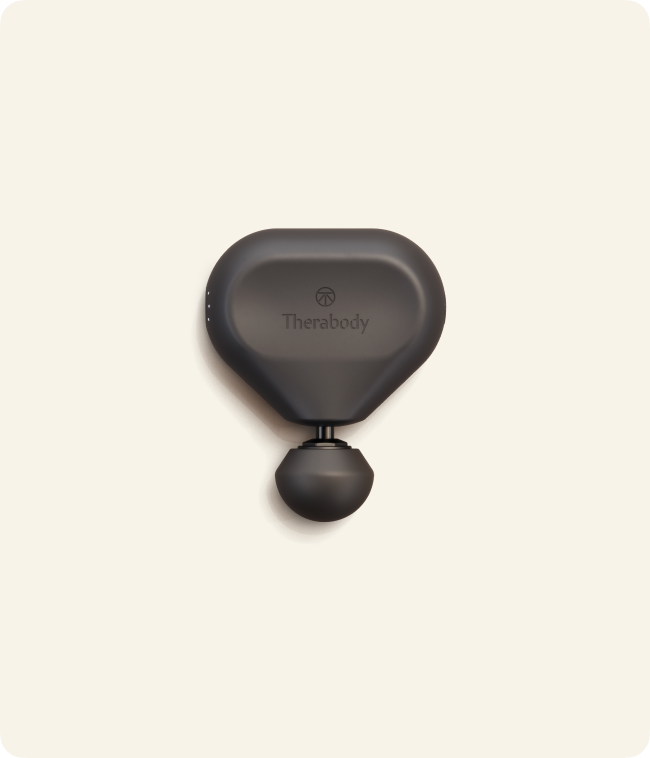


Daily Theragun Use Relieves Chronic Pain in Older Women, New Study Finds
Date de publication :
Dernière mise à jour :
Written by: TheoryEx, led by Susie Reiner, PhD
Expert contributors: Shiyu Li, PhD, Assistant Professor at Louisiana State University, School of Kinesiology; David Conroy, PhD, University of Michigan’s Motivation Lab. Experts in physical activity interventions, behavior change, and the integration of technology to improve health outcomes.
In a new randomized controlled trial at the University of Michigan, researchers found that when women over 65 used Theragun® percussive massage therapy daily, they experienced an 18% reduction in pain severity and a 24% reduction in pain interfering with their daily activities after just two months.
Here, we'll discuss why chronic pain impacts older women, how Theragun percussive massage devices help relieve chronic pain, and what the findings of this study mean for older women experiencing pain on a daily basis.

Chronic pain affects over 60% of older women
Chronic pain affects more than 60% of older women worldwide. [1, 2] This unrelenting pain limits mobility, disrupts sleep, and negatively affects mood. Without proper pain relief strategies, chronic pain impacts quality of life and mental health. [3, 4]
“Older women with chronic pain are historically underrepresented in pain self-management research — and even more so in digitally-delivered behavioral trials,” says Dr. Shiyu Li, Postdoctoral researcher at the University of Michigan (now an Assistant Professor at Louisiana State University).
The relationship between pain and physical activity is bidirectional, especially as we age. Research shows that physical activity may help reduce the symptoms of chronic pain, but chronic pain tends to lead to reduced physical activity. Staying sedentary over time results in worsened pain and disability as we age. [5, 6]
Despite the difficulty of starting and maintaining a fitness program while in chronic pain, physical activity is arguably the best tool for reducing age-related muscle loss, improving daily function, and alleviating chronic musculoskeletal pain in the knees, hips, and back. [7, 8, 9]
Women are particularly at risk for age-related muscle decline, as post-menopausal women experience more severe muscle loss, physical disability, and chronic pain than age-matched men, making pain relief solutions that work for women a critical field of study. [10]

What is percussive massage therapy — and how does it relieve pain?
Percussive massage delivered by Therabody massage guns applies rapid mechanical compression and stimulation to muscle and nervous tissue to help relieve pain.
The high frequency of the massage gun engages a neurophysiological mechanism known as the gate control response. Li explains, “When the massage gun stimulates the skin and muscle, it activates sensory nerve fibers that can block pain signals at the spinal cord, essentially closing the ‘gate' before pain reaches the brain.” The massage gun creates a “noisier” signal that drowns out pain receptors and reduces the sensation of pain. [11]
Percussive massage also helps to promote local blood flow, relieve muscle tension, and support nutrient delivery to tissues, all of which help relieve pain over time. [12, 13]
Study researchers aimed to determine whether a daily six-minute Theragun percussive massage routine could help relieve the symptoms of chronic pain in older women and enhance their overall daily activity and function.
How the study was conducted
What was the study objective?
The study evaluated whether daily self-monitoring focusing on physical activity, percussive massage therapy using Theragun Mini, or implementing both strategies promotes 1) increased engagement with these behaviors and 2) reduces pain severity and interference in older women.
These variables are defined as:
- Self-monitoring: The practice of regularly tracking behaviors to build awareness of how you are progressing toward your goals. [14] A common strategy in chronic disease management, self-monitoring encourages healthy habits by helping people to adjust their effort when they fall behind as they pursue their goals.
- Increased engagement: The consistency and extent to which participants performed and reported their prescribed behaviors (i.e., daily physical activity and percussive massage therapy) over the 30-day monitoring period, based on self-reported adherence and usage metrics
- Pain severity: The sensory strength of pain experienced (i.e., how badly does it hurt?)
- Pain interference: The functional impact of pain on daily activities (i.e., how much does the pain impact your sleep, work, and mood?)
Who were the study participants?
The MAPAP (Massage and Physical Activity for Pain) trial enrolled 108 post-menopausal women aged 65 and older across 33 US States. All participants self-reported that pain was a barrier to their regular participation in physical activity.
Importantly, all subjects in the study expressed interest in exercising more but reported not yet engaging in regular aerobic activity. This helped to understand how self-monitoring influenced physical activity and continued use of percussive massage therapy.
How was the study conducted?
The study was conducted remotely over two months.
All participants received:
- Theragun Mini device
- 6-minute daily massage routine targeting the calves, hamstrings, glutes, quads, lower back, and other muscles
- Daily physical activity goal of 30 minutes of movement (any physical activity was allowed)
- Educational session covering goal setting and action planning

Figure 1. 6-minute Theragun massage routine used during the MAPAP study.
The participants were randomized into four groups and given specific instructions for self-monitoring their behavior throughout the study. Each group was instructed to monitor a different aspect of their day through a daily survey for either:
- Physical activity alone
- Percussive massage therapy use alone
- Both physical activity and percussive massage therapy use
- No daily monitoring
This design allowed researchers to isolate whether tracking specific behaviors independently changed outcomes.
All participants followed their assigned daily self-monitoring protocol for one month. After a 1-month check-in, participants no longer completed the daily monitoring surveys, and they continued using their Theragun Mini’s and performing daily physical activity as they wished.
After month two, post-study measurements were performed for all subjects.

Figure 2. Study Design Flowchart
What did the researchers measure?
Pain severity and pain interference were measured daily during the first month of the study, with additional pain testing questionnaires administered at baseline, following the first month, and after the study concluded. [15]
Daily physical activity was measured using a thigh-worn accelerometer for one week at baseline, month 1, and month 2, and self-reported questionnaires. Satisfaction and perceived treatment efficacy were also measured.

What did the study find?
67% of participants reported chronic pain relief with consistent use of the Theragun Mini
Approximately 67% of participants experienced meaningful chronic pain relief, with an average reduction in daily pain severity of approximately 18% after two months. In addition, 60% of subjects reported a clinically meaningful improvement in pain, defined as a pain reduction of 10% or more.
The average pain severity (on a scale of 0-10) fell from 4.71 at baseline to 3.88 at month two, a moderate-to-large improvement. Pain severity began to decline after just one day and stabilized around 12 days, highlighting the near immediate impact of percussive massage therapy on participants’ chronic pain relief.
Li says, “Most pain self-management trials rely on pre-post comparisons that can only tell you whether something changed, not when. Our intensive longitudinal design let us see that improvement was already happening early, which suggests the MAPAP intervention may have a more immediate effect than we anticipated.”
Key takeaway: Most participants experienced meaningful pain relief within two weeks of starting a consistent 6-minute routine with the Theragun Mini.

Figure 3. Changes in pain severity (left) and pain interference (right) from baseline to each follow-up check in.
Pain was less disruptive to daily life after using the Theragun Mini
The study found that older women who use percussive massage therapy (regardless of self-monitoring methods) experienced fewer disruptions to their sleep, mood, work, and physical activity because of their pain.
Pain interference scores decreased by approximately 24% over the 2-month study period. 73% of subjects reported some improvement, and 63% of participants reported an improvement of 10% or more.
Pain interference ratings continued to decline throughout the study period, suggesting that the functional benefits of pain relief from percussive massage therapy may be long-lasting and compounded with regular use.
Key takeaway: When women used Theragun Mini consistently, they experienced less disruption to their daily lives due to pain.
Participants continued to use Theragun Mini even without daily reminders
Study participants used the Theragun Mini without daily prompts and typically for longer than the suggested minimum time.
There were no meaningful differences between groups in the frequency of physical activity or percussive massage therapy use during the self-monitoring period. Pain improvements persisted through month two even without regular prompts to move or use the Theragun. This suggests that having access to education and tools that offer pain relief (i.e., Theragun Mini) was successful in establishing the routine.
Participants were given a 6-minute Theragun Mini routine, yet they reported used the device for an average 15 minutes per day, highlighting satisfaction with results.
“There's a well-known 'law of attrition' in digital health research: participants pick up a new tool with enthusiasm and abandon it within the first few weeks. We did not observe this pattern in our MAPAP trial,” says Li. “Older women living in chronic pain who actively seek out a non-pharmacological solution are already motivated before they walk in the door. That kind of self-selection matters and probably sets a strong foundation for engagement.”
Key takeaway: Women continued to use their Theragun consistently without being prompted, indicating that it offered real pain relief and that its use was sustainable.

Physical activity levels stayed consistent
While participants were encouraged to move more, overall physical activity levels did not significantly change over the course of the study.
Participants were relatively active at baseline, averaging around 5,500–5,800 steps per day. They also consistently reported meeting the 30-minute daily movement goal on most days during the intervention. In other words, there may not have been much room for measurable increases, especially over a relatively short time frame.
What stands out is that pain improved even without a measurable increase in activity.
This finding suggests that reducing pain does not always require large changes in movement. Instead, pain relief may be an important first step that helps people feel more capable, comfortable, and confident before meaningful changes in activity follow.
Key takeaway: You don’t need to overhaul your routine to start seeing benefits. Small, consistent actions, like a short daily massage routine, can relieve pain and help lay the groundwork for longer-term behavior change.
What this research means for older women experiencing chronic pain
This study provides strong evidence that a structured daily routine using percussive massage is practical, sustainable, and effective for reducing chronic pain symptoms in older women.
Percussive massage therapy complements regular exercise as a part of a healthy routine that relieves daily aches and pains. [5, 6]
Providing education on six-minute Theragun Mini routine was a sustainable and effective strategy to relieve pain and reduce the severity of pain experienced in older women.

Important considerations
Li and Conroy note that this study did not directly identify the mechanism that influenced the pain reduction study participants experienced.
“The lack of a no-treatment control group that did not receive a massage gun or a prescription for the six exercises limited our ability to rule out a placebo effect.” Conroy explained.
Li added, “Pain is inherently subjective, and self-reported outcomes are particularly sensitive to that.” While the team believes the root mechanism is neurophysiological based on previous evidence, we need a placebo-controlled trial to confirm.”
Conroy also highlighted that not every subject had the same pain presentation. “The sample was not differentiated based on pain phenotypes, so it is not clear whether some phenotypes are more likely to respond positively to percussive massage therapy than others.”
Key takeaways
- “Massage gun use is safe for older women who report that pain is a barrier to physical activity. Older women report decreased pain within the first two weeks of using a massage gun,” says senior researcher on the study, Dr. David Conroy.
- A daily 6-minute routine using Theragun Mini significantly reduced pain severity by 18% and pain interference in daily life by 24% improvement in older women.
- Pain relief began within the first few days, stabilized around day 12, and remained better than baseline for the duration of the trial, while functional improvements continued throughout the two-month period.
- Percussive massage should not replace other aspects of a healthy routine (especially exercise), though it appears to be a useful tool for relieving pain in older women.
- Older women in chronic pain naturally maintained a daily Theragun routine (without app reminders or prompts) and used it for more than twice as long as initially instructed.
Results from a randomized, 2-month study of 108 post-menopausal women aged 65+ using the Theragun Mini 1x/daily as part of a structured 6-minute routine with wellness education; no adverse events were reported during the study. Self-reported outcomes are from validated scales; individual results may vary.
References:
- Common chronic pain conditions in developed and developing countries: gender and age differences and comorbidity with depression-anxiety disorders
- Defining gender disparities in pain management
- Impact of Chronic Pain on Patients’ Quality of Life: A Comparative Mixed-Methods Study
- Chronic Pain and Mental Health Disorders: Shared Neural Mechanisms, Epidemiology, and Treatment
- Exercise-Induced Hypoalgesia in Pain-Free and Chronic Pain Populations: State of the Art and Future Directions
- Effect of Physical Activity on Chronic Widespread Pain: Insights From Meta-Analysis and Two-Sample Mendelian Randomization
- Exercise for sarcopenia in older people: A systematic review and network meta-analysis
- Exercise interventions in healthy older adults with sarcopenia: A systematic review and meta-analysis
- Influence of Sarcopenia on the Effect of Exercise Therapy for Elderly Patients with Chronic Low Back Pain
- The contribution of age and sex hormones to female neuromuscular function across the adult lifespan
- Theories of pain: from specificity to gate control
- Effect of Localized Vibration Massage on Popliteal Blood Flow
- The Effect Of Percussive Therapy On Musculoskeletal Performance And Experiences Of Pain: A Systematic Literature Review
- The Behaviour Change Technique Ontology: Transforming the Behaviour Change Technique Taxonomy v1
- Pain assessment: global use of the Brief Pain Inventory


